
By Grant Miller
You can usually tell when you’re walking into a quality boxing gym when it overloads your senses: aroma of blood and sweat, the beeping of the timer, the pop of athletes hitting the heavy bag and mitts.
However, the best boxing gyms are filled with voices, especially the grunts of boxers sparring and the non-stop coaching from the edge of the ring. In those environments, knowledge is passed down and then applied.
Boxing is a tough sport that teaches you how to fight and comes with the risks of combat, but it also teaches lessons that apply to life for adults as well as youth and should have more support in school systems.
I started my boxing journey in Chicago in 2011, a particularly angry time in my life. I told myself that I could either hit the person I was the most enraged with and go to prison, or I could hit a punching bag and go home.
I chose the bag, and I didn’t realize it yet, but there was science supporting my decision. According to a 2022 study in the American Journal of Lifestyle Medicine, non-contact boxing exercises provide “cathartic release of anger and stress, with evidence of improved mood, self-esteem, confidence, concentration, metabolic burden, strength and coordination.”
So I hit the big almost every day, but I wasn’t very good yet. I needed instruction, especially if I wanted to mix it up in the ring.
By 2015, I took lessons with the Chicago Park District. The instructor taught us a basic 1-2 combination and made us spar. So I took my anger out on my opponents, but they punched back of course. I would show up to work with a bruise on my eye from an opponent with a good jab and get questioned by my concerned coworkers, but I always went back. I was hooked.
I returned to my home state of Connecticut in 2017 and joined Blue Boy Boxing Gym. Unlike the Chicago Park District classes, the fighters at Blue Boy weren’t lawyers and college students looking for a workout. They were competitive fighters.
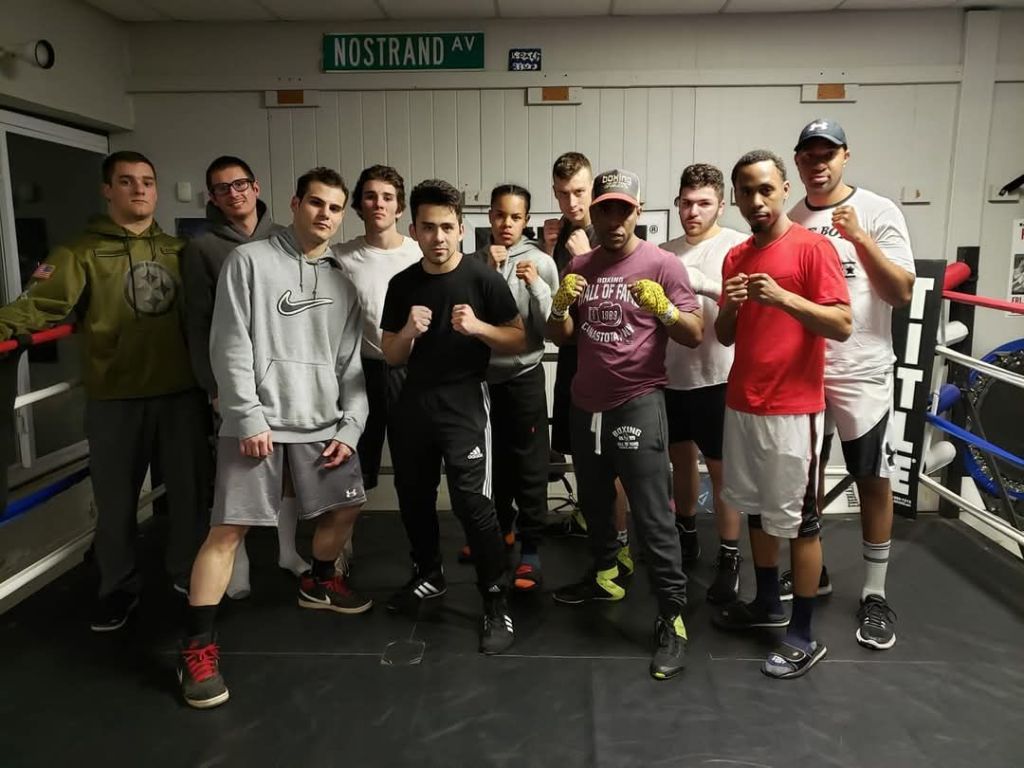
One of my first sparring partners was Julian Smith. I remembered meeting him before through basketball, but I didn’t know how good he was at boxing. I found out the hard way when I didn’t protect myself properly.
Yep. That’s me taking a solid right. To my credit, I finished the round. I had no personal ill will towards Smith, but I swore revenge. I also swore to myself to never get hit like that again, but Coach Blue taught me a valuable lesson.
“You’re gonna get hit,” Blue said. “You have to control where he hits you.”
I trained for three weeks straight, working on head movement, and then Smith invited me to spar again.
Coach Blue gave me a defensive strategy that allowed me to get close until I landed a right of my own. It wasn’t a knockout or anything, but it was a small victory.
Smith and I pounded gloves after that round, and my confidence grew. In hindsight, I really had no clue who I was fighting. Smith won the Western New England Golden Gloves title in 2019. After later getting sidelined with a knee injury and moving to Philadelphia, I watched Smith knock out other fighters with that same right hand on social media. In 2023, he won the Western New England Golden Gloves title again.
Before my injury, I jumped in the ring whenever I could, adjusting to the higher level of competition and getting sharper and more aggressive. Here I am against Brad Turner, another competitive fighter with annoyingly long arms, quick hands and even quicker feet and head movement. Every round against him was a lesson in patience, but at least I got a some shots in.
I didn’t spar again until the summer of 2024. Rusty was an understatement, but it was good to have that feeling of being in the ring again.
I’m far from a competitor at this point in my life, but each boxing gym and every opponent were treasure troves of knowledge that I apply to this day. If I could combine all the life lessons boxing taught me into one sentence it would be this.
Only hit if you must, don’t get hit if you don’t have to, but if you must take a punch, control where and when you take it.
When times get hard, when I’m faced with opposition, I remember this lesson. It hasn’t failed to keep me out of trouble yet.
After years of meeting and fighting boxers, I developed an eye for fighters. With few exceptions, they were usually quiet but not shy, patient but not slow.
Students have been no exception.
Without fail, not a single competitive youth boxer has given me a behavior issues and they rarely fought in school. Meanwhile, when I suggested that kids who fought in school hallways and bathrooms try boxing, they looked at me like I was crazy.
Without fail, competitive boxers have been respectful towards me. It was usually kids who have never been in the ring who had too much mouth.
This is my seventh year of teaching, and my eyes haven’t failed me yet. The respect, poise, and grit that young fighters learn in the gym bleeds into their everyday life, and it usually shows up on first impression.
So what does a violent sport provide that creates better-behaved youth? Confidence.
According to a 2019 study in Frontiers in Psychology ” self-efficacy was positively correlated with self-control and self-control was negatively correlated with aggressive behavior. ” In other words, the more confident the boxer, the less aggressive he is outside of the ring because he has learned to control his emotions and impulses.
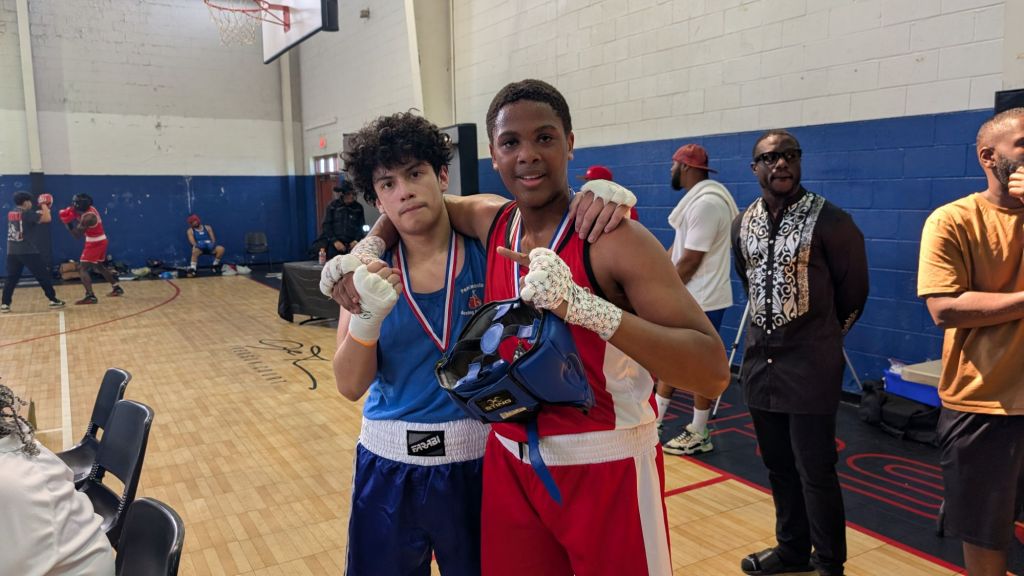
This year I met Christian Atkinson, freshman at Maury, when he walked into my English 09 class on the first day of school. Tall for a kid his age, Atkinson carried himself with the self-assuredness typical of most fighters. When he shared with me that he was a competitive boxer, I wasn’t surprised.
Fighting for Team Norfolk, Atkinson had a bout on April 5th in Newport News at 165 pounds against Alan Reyes of the Peninsula Boxing Academy. He lost, but he gave a good effort. When I praised his performance in front of the class the following week, he didn’t brag or flex. He just nodded his head and resumed his classwork.
Like the Frontiers in Psychology study suggests, Atkinson hasn’t given me a single behavior issue all year.

When I met Timontae Fisher near the end of the 2023-2024 school year, the first thing I noticed was his boxer’s demeanor. He didn’t speak unless he had a question or wanted to show me one of his test scores. I didn’t know he was a boxer until a few security guards told me the following school year, but I assumed he could handle himself. When I asked him about boxing, his eyes lit up.
Fisher, now a senior at Maury High School, had plenty to say about the sport’s value as an emotional release.
“It’s a great way to get your emotions out for sure,” Fisher said. “When you’re sparring, you’re gonna to get angry. You might get mad that you’re tired.”
However, he didn’t believe in trying boxing without an interest in the sport itself.
“It’s about your passion for it,” Fisher said. “If you have a passion for it, then it’s going to carry out.”
This school year Fisher spent months prepping for his first bout at Todd’s Eastside Boxing Gym under the tutelage of legendary Norfolk coach James “Bubba” Winfield, a man known for once fighting Muhammad Ali. When asked about the basics of boxing, Coach Winfield didn’t hesitate to give a lesson, as is customary in any boxing establishment.
Whatever lessons Fisher received at Eastside Boxing were about to be applied. The moment of truth came on April 12th at the Effingham Street Family YMCA.
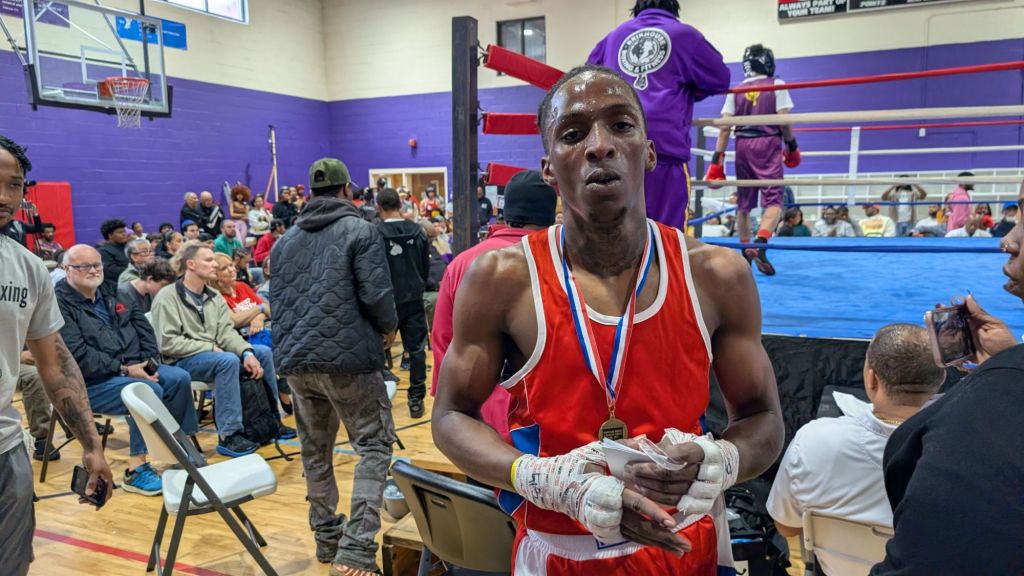
Fisher fought against Bishop Upton of C4 Boxing at 154 pounds. If he never told me this was his first bout, I wouldn’t have thought it was. He moved with the patient assertiveness that normally comes with experience.
His inexperience didn’t become apparent until the end of the round when he showed some exhaustion, but that’s not a criticism. Fisher gave it his all and it showed, much to the crowd’s enjoyment. Coaches, fighters, family, and friends all cheered on his heart.
The most hair-raising part of every boxing match is when they announce the winner after both fighters go the distance. The room goes quiet with anticipation and then erupts with cheers for the victor.
On April 12th, that victor was Fisher. From start to finish, his confidence never wavered, which makes sense considering he said he planned on going pro by 2027.
“I’m going all the way,” Fisher said. “I’ll be a champion. I can’t deny myself. I know I’m going to make it because God said it would be so.”
Boxing has always brought the benefits of wisdom, patience, and confidence. In exchange, all it has ever asked for was the fighter’s dedication and willingness to learn. The same could be said for many high school sports, which is why it is my position that school districts should organize school boxing teams and leagues.
Some may disagree, and I understand why. Boxing obviously carries a concussion risk, so much so that the American Academy of Pediatrics and Canadian Pediatrics Society discouraged youth boxing in general.
However, other sports with high concussion risk receive our full support all the time, especially football(in which Maury is the best in the state), because we take the good with the bad. We can approach boxing the same way.
There’s another major concussion risk that we don’t discuss enough, and that’s school violence. School violence surged after the COVID pandemic, even against teachers and staff who often decide to quit. School bullying in Virginia also increased post-pandemic.
Public schools do the best they can, but without better emotional regulation there is an increased concussion for everyone who walks these halls on a daily basis. It will take more than boxing to solve that problem, but the aforementioned studies confirm that pugilism helps students control themselves and make better decisions outside of the ring.
Boxing has taught me that mistakes hurt. It also taught me that sometimes victories hurt too, but you don’t win unless you master yourself in and out of the ring. Students of the sport learn that every day, and life’s learners do too. It’s about time we encouraged schools to facilitate that learning as well.
 The Commodore Chronicle