by Alamar Alyamani
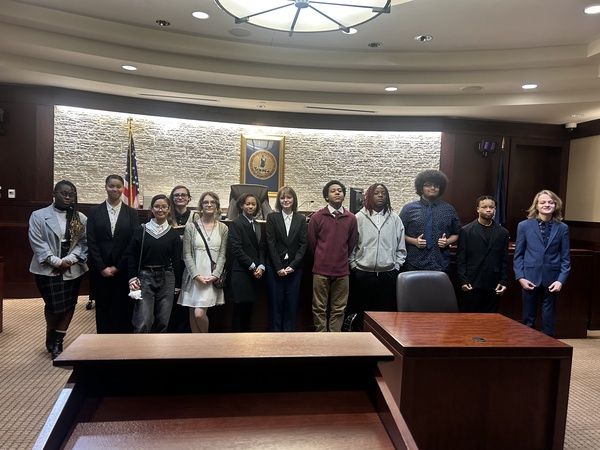
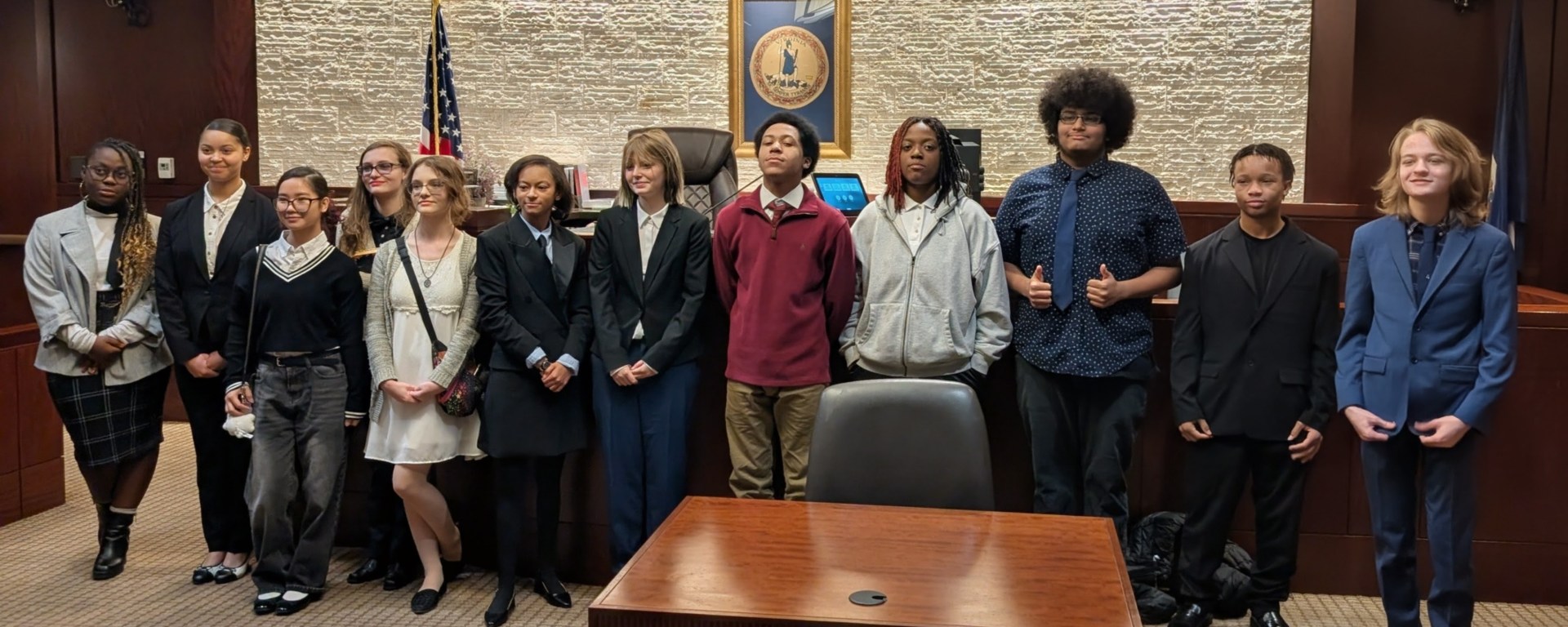
At Maury High School, mock trial is a competitive, extracurricular activity where students simulate a civil or criminal trial based on a hypothetical case. Working with attorney coaches, students fill roles as lawyers and witnesses, presenting opening statements, direct and cross-examinations, and closing arguments before real judges to develop public speaking, critical thinking, and legal knowledge.
Maury High School has a competitive mock trial team called Model Judiciary, but they have flown under the radar.
The team received a fictional case that applied actual law months before the competition in February, practiced, and studied. Then they won their first mock trial.
I interviewed three key members of the club: Ms. Tanya Scott, Mr. Grant Miller, and junior prosecutor Alyssa Tabb.
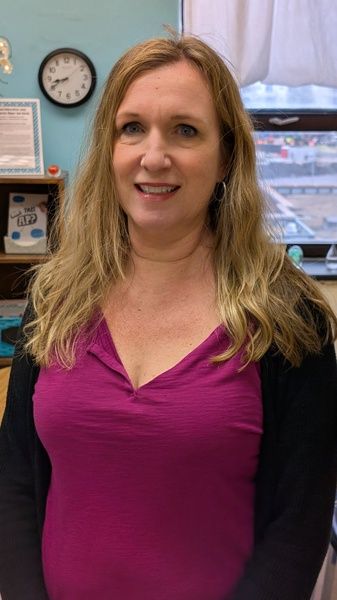
Founder Miss Tanya Scott is the gifted resource teacher at Maury High School and Northside Middle School. The following has been edited for clarity.
AA: Is it true that you started Model Judiciary?
TS: Yeah, so I’ve been at the middle school level for about 10 years, and at the middle school level, they had something called “Courtroom Law” where the attorneys come and teach the kids how to deal with a mock case. Kids get roles like defense, prosecution, and cross-examination. I would watch these middle school kids do it year after year and think we need to do this in high schools. So we started that last year. And I have no experience with being an attorney at all. I was just hoping that when I got started it would work out.
Then Mr. Miller was walking by my room one day and noticed us. Turns out Mr. Miller did it at the college level (Law school level—Ed.). So he really knew his stuff, and we actually got an attorney to come and help us. After a couple of practices with Mr. Miller, the attorney said, “You don’t need me; he knows everything you need to know.” This year I had a bunch of new things added to my plate, so I gave him the role, and I try to be an assistant, helper, cheerleader, mother, whatever I could be. Mr. Miller does a great job coaching them.
AA: Were you interested in the profession?
TS: No, not particularly. I coached a debate team for a few years at Rosemont, but they wouldn’t let us compete because we weren’t officially a school. The kids really loved it. We did a lot of stuff, like conducting a good argument and learning how to be persuasive. I love doing debate, but I’ve never wanted to be an attorney necessarily. It’s a fun thing to do on the side.
AA: Who do you think would enjoy joining the club?
TS: I would. If I was a student, I would be like, “Oh, I’m too shy.”I don’t want to speak up in front of people. But there’s so many different parts, so everyone can find something to be. So, really, anybody who is interested in doing anything like that as a career, anybody who wants to beat their friends in a debate, like the ICE protest. If you are shy, you can be a juror and just judge another school, and he gives you donuts after practice, so that’s an incentive. Lastly, I was absolutely blown away with how well our team did, and how well they managed the changes. I could not have been prouder of them. I’m really excited to see the program grow!
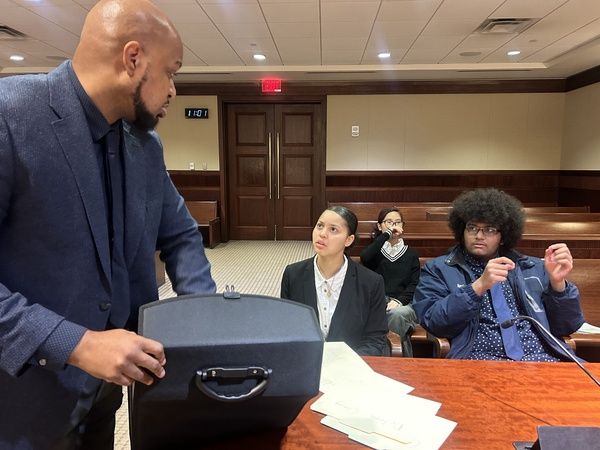
Mr. Miller teaches English 9 and 10 at Maury High School. He’s also an advisor for the school newspaper, the Commodore Chronicle, and he coaches the Model Judiciary team.
The following has been edited for clarity.
AA: Do the students get to pick their roles?
GM: I assigned them, but if a student is obviously not comfortable doing it, then we need somebody else to do it. I personally would like to have somebody who is energetic and enthusiastic about doing it because that’s who’s going to perform the best. But based on my experience and the skills that I observe in the student, on the first day, I will assign them a role and then ask them if they accept.
AA: Can you give me an example of what you would see?
GM: The first practice I gave them a fake problem like Goldilocks and the three bears, and Goldilocks is charged with trespassing and theft. I then ask them to write a cross-examination, which are yes-or-no questions, to get them to corner the witness into agreeing with what you are saying. It’s very hostile questioning, and it gives me an idea of the temperament of the person who’s trying out. If you are soft, it tells me you don’t want to be an attorney because I need my attorneys to be assertive.
AA: Did you also do this last year?
GM: Yes and no. We tried last year, but it was hard to get students to consistently come to practice. So we just didn’t have enough people to compete. This year we were fortunate enough to have enough people. It was a struggle at first. Quite a few folks weren’t consistent. Stormie [Perry] was very consistent from the jump. We kept looking, and we found some people who were dedicated and consistent, and we had enough for a team. So we were able to compete this year on the trial level.
AA: I know Miss Scott founded it last year, so how did you start coaching?
GM: I just asked her about it, and I didn’t quite know what it was. She told me it was basically mock trial, so I offered to help coach. Upon watching me coach, she essentially wanted me to just take over coaching this year. I competed in mock trial before I was a teacher at law school in Chicago. I was trained on a very competitive mock trial team. We were ranked number three in the country at one point (Chicago-Kent College of Law-Ed). I think we were number five by the time I graduated, so we were always top five the entire time I was there.
We would go around and win, and if we didn’t win, we’d come close. It was a lot of fun, and it was very hard. It teaches you the kind of mentality you have to have to win at this level. You need consistency. If I see inconsistency, I frankly don’t want you on the team because these case files are very detailed. If you’re just kind of glancing over and not looking consistently, you’re not going to do well on the trial. You have to look at it every day and study it. You also have to have a competitive mindset. We were fortunate because Stormie was consistent, and she’s competitive. And then Alyssa [Tabb] was consistent and competitive. She was very driven. She had her stuff memorized in maybe a week or two. Alyssa and Stormy went out there and killed it. Our defense also did well. But consistency was an issue. Some people who originally were not attorneys had to step up at the last minute, and they did a good job because they were dedicated. They were at every practice except one who joined recently. They knew the case file well enough to step in and do it. So it worked out, but I need consistency. I need the competitive nature. Because that’s how the legal profession is. It’s a win-or-lose profession.
AA: Were you interested in the profession?
GM: At one point, yes until it essentially burned me out pretty early. I enjoy teaching a lot more, but I think that when I do something like mock trial, that little bit of a lawyer hat comes back out. I told my students my mentality is different. I’m not going to be the same person you see in class. Because in class I’m trying to help you learn, but in mock trial I’m trying to win. So I’m going to imprint my winning mentality onto you, and you have to have a strong enough personality to handle that. Fortunately, we had a group that did have that personality, and they were competitive, and for that reason, they did very well.
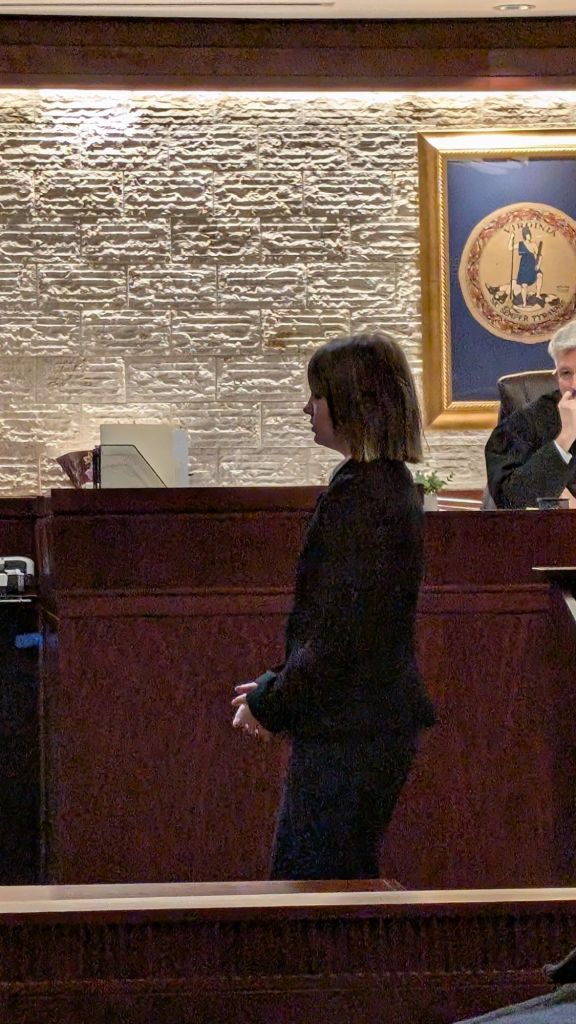
AA: How does the actual trial go?
GM: We just had a trial, and we got guilty or not guilty depending on what side you’re on. Our defense team did not get a not-guilty [verdict], which is actually common in real-life [criminal] defense. You lose more than you win. The judge apparently praised them quite a bit for their professionalism and their cross-examinations. And then our prosecution team got a guilty verdict, which is what you expect from your prosecution team. That judge was also very complimentary of how in sync they were and how succinct their questioning was. Also, anyone can attend the trial. Even some staff members came to watch. The trial is in an actual courtroom downtown.
AA: Who would enjoy joining the club?
GM: You have to have an interest in the law because, without that, obviously, there’s no point. And you have to be a strong speaker and strong reader because you will have to read in detail in order to form a good argument and win your case. A lot of times, the winner or loser of a trial is determined by who is the most detailed. It is determined by who studied the case the most, who knows it the best, because you can have a plan. It’s like…I always use boxing analogies with my students. You know, Mike Tyson said everyone has a plan until they get punched in the face. And we can prepare, but once you get in that courtroom, you will get figuratively punched in the face. And the only way to survive it is to know the case well enough that even if it’s not the way you planned it, you can punch back. And that only happens if you know the case and if you know the law. You need to be a strong reader and a speaker to do that.
Preparation prepares you even for things you don’t see coming. The rules can change. You might have to step up into a new role. We did not see that coming. One person just stopped coming. So I had another student prepare maybe two weeks in advance, and [Brandon Morgan] did a really good job. And then we had someone just not show the day of. So I had someone who was supposed to be a juror step in maybe ten minutes before the trial. [Celina Machicote] also did an excellent job. Victoreia Jones was a juror, but she stepped in as an organizer. She was great at helping make sure people came to practice. And again, I can’t sing Stormie and Alyssa’s praises enough. They were warriors.
My only final comment is that success in mock trial, I found, is very much like success in school. You have to be disciplined. You have to be consistent. And you have to have some competitive drive. Even if you’re not trying to beat everyone around you, you should be trying to beat your previous score, your previous grade. So if joining mock trial helps you build the positive habits necessary to succeed, we’ll have done our job.
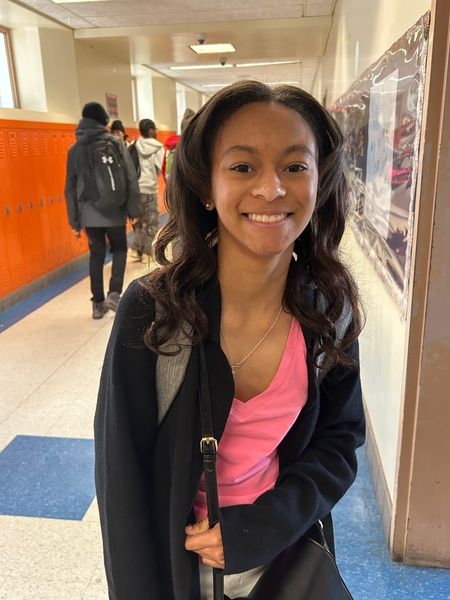
Alyssa Tabb is a junior at Maury and is part of the mock trial team. In her last trial, she was the prosecutor.
The following has been edited for clarity.
AA: Why did you decide to join?
AT: I was interested in law, and I didn’t know about the mock trial until Mrs. Otto told me about it. I am interested in the profession.
AA: Who do you think would enjoy joining the club?
AT: Someone who is really into law or wants to be more confident in speaking. Another big thing is commitment, because when we started, we had two defense [attorneys], but they didn’t show up two weeks prior to the competition. So we really had to pull people, and Brandon was really amazing. He was supposed to be a witness, but because one of our defense [attorneys] left, he took that part. It’s really hard, and he did a really good job trying to fight for the defense.
You have to study, memorize the questions, and understand how to object and everything around the trial. It was really interesting.

